

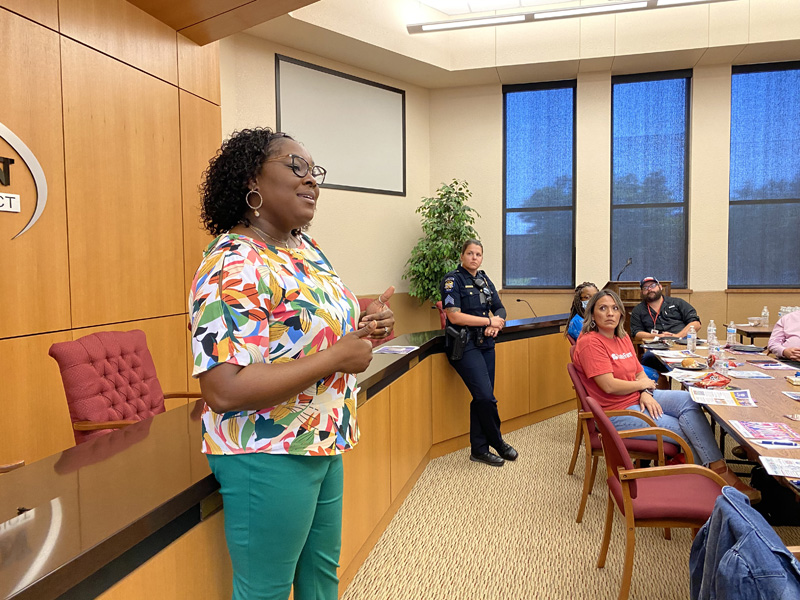
A longtime veteran of the Texas Department of Family and Protective Services (DFPS) spoke recently at a local event about how to be aware of and report abuse, neglect or human trafficking issues to the state.
Doniqua Lewis — who has served 14 years in the department — serves as an investigator with the Child Protective Investigations branch of DFPS.
She also works with local churches and other community organizations to assist children who may be suffering from child abuse or neglect through her work with faith-based and community engagement efforts of DFPS.
“I have spent most of my time as an investigator for the agency and I love it,” Lewis said. “I have so much passion for it by aiding and mentoring families.”
The best piece of advice Lewis gives is asking questions, she said, adding that it is important to know what is going on in a child’s life. Frequently, the department will investigate cases reported by neighbors or other observers who understand the importance of remaining vigilant for problematic situations.
Parents can also invest in different monitoring software options that track the browser history of their children to ensure they are not visiting websites that are used to traffic individuals. There are also different GPS tags that parents can buy and place on backpacks or purses to monitor a child’s location, said Lewis.
“That cell phone is the biggest threat to our children at this time,” Lewis said. “It’s good to let children have a cell phone so you can communicate with them and know where they are but put the safety measures in place.”
She encourages parents to read the text messages their children send to help identify any potential issues.
Additionally, the nature of human trafficking has changed, said Lewis. Many times, it is friends or other trusted individuals who are traffickers, not a pimp on the street.
In some cases, it is trafficked individuals who may recruit their peers.
“It is kids introducing kids into this trafficking environment,” Lewis said. “Sometimes other kids are not prepared for it and they are unaware of what they are getting into.”
For the full story, see the Oct. 6 issue of The Sachse News.












0 Comments